
My OpenLearn Profile
Personalise your OpenLearn profile, save your favourite content and get recognition for your learning


Get inspired and learn something new today
 article icon
Education & Development
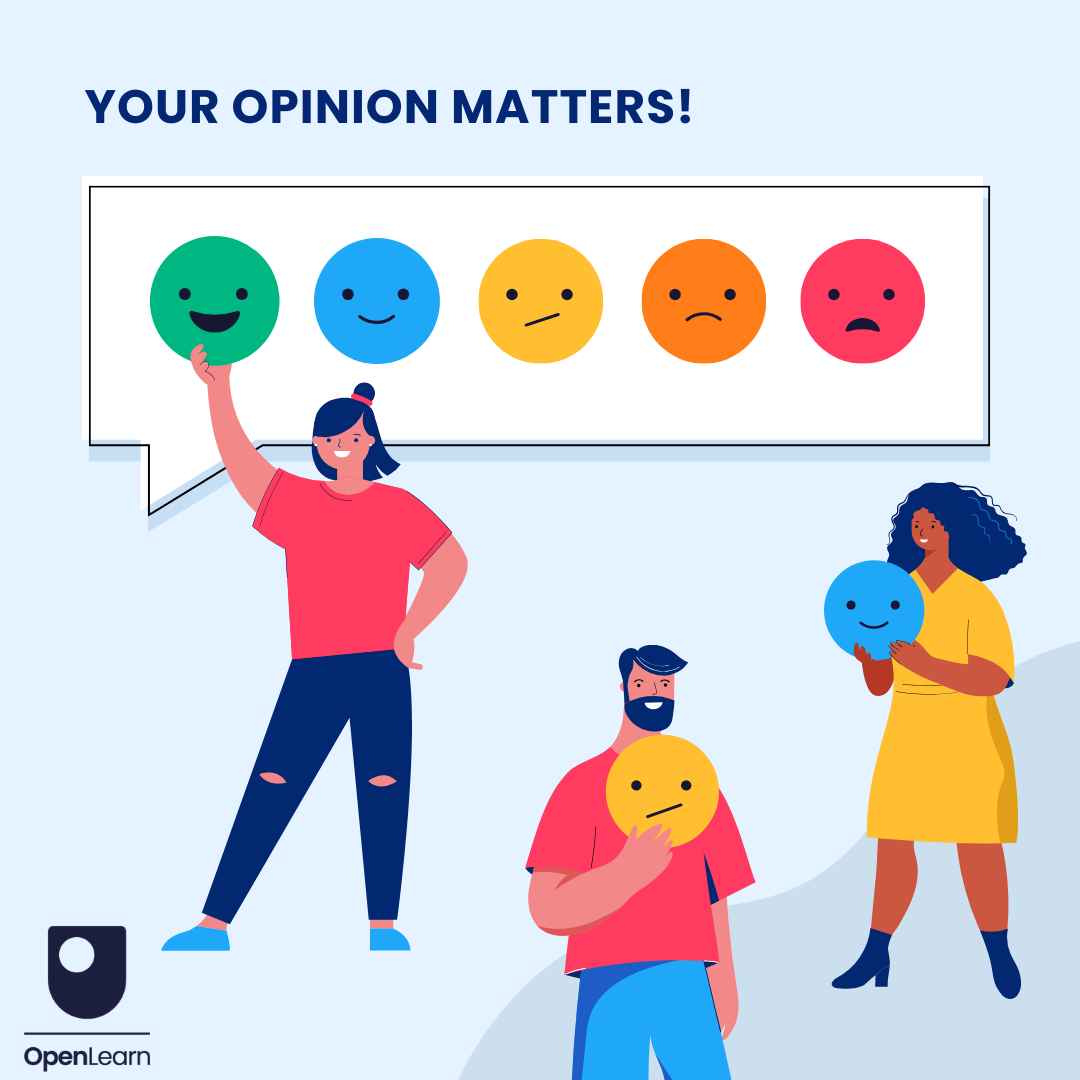
What do you think about OpenLearn? Take the survey
Let us know what you think! We are running a survey to find out more about how you use OpenLearn, what’s great and what could be improved. The aim is to provide a better free learning experience for everyone.
 free course icon
level 1: introductory icon
Badge icon
free course icon
level 1: introductory icon
Badge icon
Science, Maths & Technology
Understanding science: what we cannot know
This free course, Understanding science: what we cannot know, investigates the boundaries of our understanding across numerous scientific fields. It asks whether it's possible that we will one day know everything, or whether some knowledge will always lie beyond the bounds of human comprehension.
 activity icon
Health, Sports & Psychology
Are you a super recogniser?
Police super-recognisers have an above average ability to recognise faces and have identified a large number of criminals via CCTV footage. Do you possess the skill? Try our quiz to find out.
 article icon
Miscellaneous
OpenLearn’s Intro to LAWW
OpenLearn, the free learning platform of The Open University, is delighted to return as a partner of Learning at Work Week (13–19 May 2024) again this year.
 video icon
Society, Politics & Law
Learning from the Global South
Voices from the Global South is a series of six short films made to stimulate thinking about and reflection on the difference that geography makes to understanding the climate crisis and its impact.
 audio icon
Health, Sports & Psychology
Research on young people with melanoma
Listen to two podcasts, by Professor Susanne Cruickshank and Dr Wendy McInally who discuss the topic of research on young people and melanoma (skin cancer).
 free course icon
level 1: introductory icon
Badge icon
free course icon
level 1: introductory icon
Badge icon
Health, Sports & Psychology
Forensic psychology
In this free course, Forensic psychology, you will discover how psychology can help obtain evidence from eyewitnesses in police investigations and prevent miscarriages of justice.
 article icon
History & The Arts
HeadStart Classical Studies
Explore the worlds of ancient Greece and Rome with this collection of free courses on the classical world.
You can use OpenLearn to
Study free courses
From 1 to 100 hours of learning - discover hundreds of free courses to inspire and inform everyone.
Free coursesEarn while you learn
Earn a free digital badge or Statement of Participation as evidence of your learning to share with employers, friends and family.
Find out moreStudy skills
Improve your study skills and get acquainted with student life with our expertly created courses and resources.
Study skillsWork skills
Boost your employability skills and find useful resources to help you with your life outside of work.
Work skillsGet the most out of OpenLearn
Anyone can learn for free on OpenLearn but creating an account lets you set up a personal learning profile which tracks your course progress and gives you access to Statements of Participation and digital badges you earn along the way. Sign-up now!